
About St. Peter's Lutheran Church, Gibbon MN
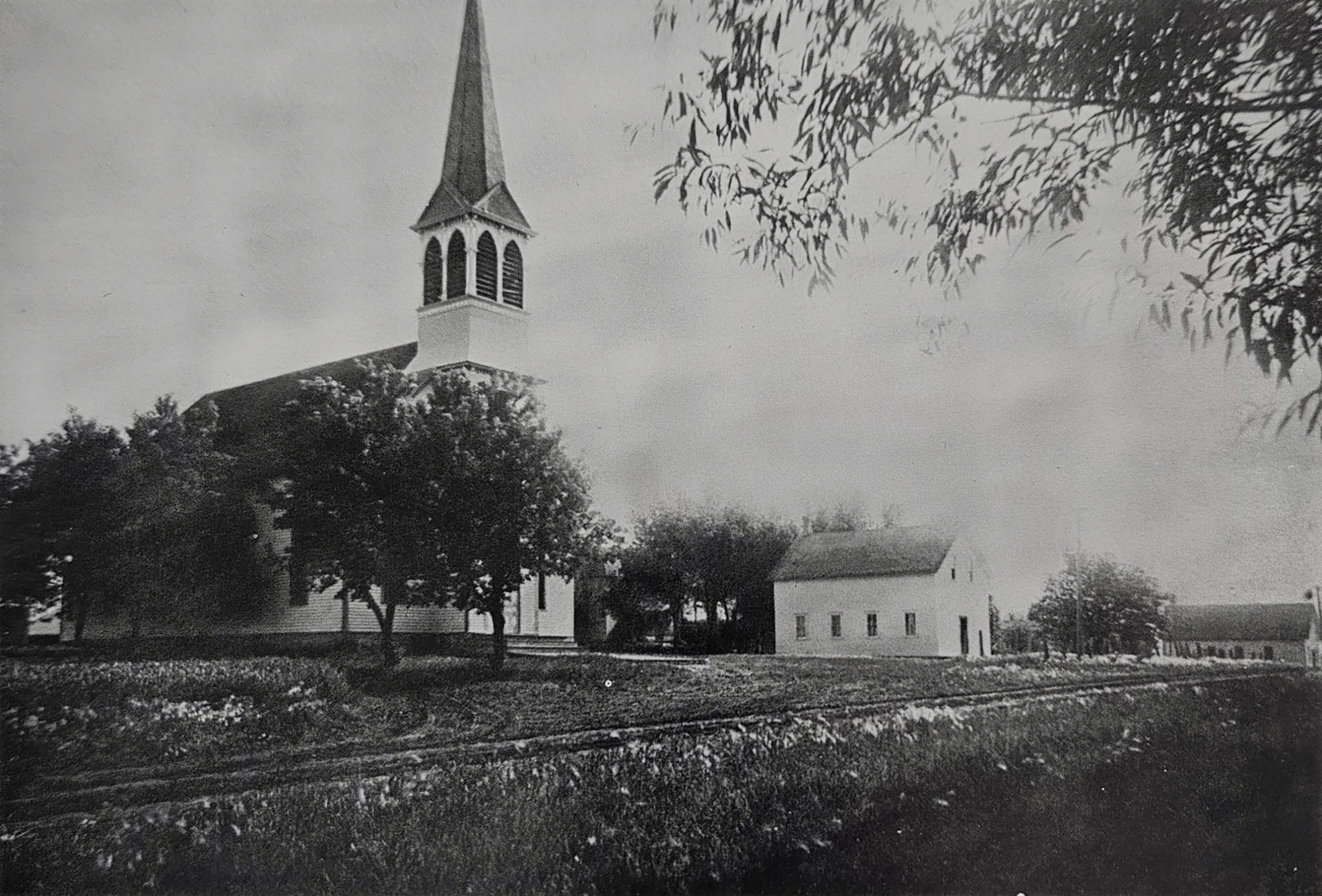
St. Peter's has taught the good news of Jesus Christ in Moltke Township since 1879. Our work is to hand that same message to the next generation: children, teenagers and adults.
On Sunday mornings we gather to hear God's Word, pray, sing, and receive what He gives. The service follows an order Christians have used for centuries, and the bulletin prints every word so you can follow along.
What We Care About
St. Peter's has always put its children first. The congregation ran a Lutheran school for 138 years. When the school closed in 2019, that work moved into Sunday School, confirmation and youth ministry, and a Director of Christian Education now works alongside the pastor.
Worship
We gather to hear God's Word and receive His gifts. Everything in the service comes from the Bible or points back to it.
Teaching
We teach the Bible to every age, from three-year-olds in Sunday School to adults in Bible study, so each of us knows what God says and why it matters.
Outreach
We tell our neighbors about Jesus and help people in need, in word and in deed.
Caring for One Another
We pray for each other, visit the sick and homebound, and stand with each other in hard times.
Worship
We gather to hear God's Word and receive His gifts. Everything in the service comes from the Bible or points back to it.
Teaching
We teach the Bible to every age, from three-year-olds in Sunday School to adults in Bible study, so each of us knows what God says and why it matters.
Outreach
We tell our neighbors about Jesus and help people in need, in word and in deed.
Caring for One Another
We pray for each other, visit the sick and homebound, and stand with each other in hard times.
What We Believe
St. Peter's belongs to the Lutheran Church–Missouri Synod (LCMS). The topics below explain what we teach.
God
With the universal Christian Church, we teach and respond to the love of the Triune God:
the Father, creator of all that exists;
Jesus Christ, the Son, who became human to suffer and die for the sins of all human beings and to rise to life again in the ultimate victory over death and Satan; and
the Holy Spirit, who creates faith through God’s Word and Sacraments.
The three persons of the Trinity are coequal and coeternal, one God.
Scripture
As Lutheran Christians, we believe that the canonical books of the Old and New Testament are God's own Word to us.
Holy Baptism
In Baptism, God gives forgiveness of sins. His promise is for people of every age, including infants and young children.
We maintain the historic and Biblical practice of baptizing infants, children, and adults. Baptisms are scheduled throughout the year as people wish to be baptized or have their children baptized. If you have not been baptized and desire to be, please contact the Pastor.
What is Baptism?
Baptism is not just plain water, but it is the water included in God’s command and combined with God’s Word.
Which is that word of God?
Christ our Lord says in the last chapter of Matthew: “Therefore go and make disciples of all nations, baptizing them in the name of the Father and of the Son and of the Holy Spirit.” (Matthew 28:19).
What benefits does Baptism give?
It works forgiveness of sins, rescues from death and the devil, and gives eternal salvation to all who believe this, as the words and promises of God declare.
Which are these words and promises of God?
Christ our Lord says in the last chapter of Mark: “Whoever believes and is baptized will be saved, but whoever does not believe will be condemned.” (Mark 16:16)
How can water do such great things?
Certainly not just water, but the word of God in and with the water does these things, along with the faith which trusts this word of God in the water. For without God’s word the water is plain water and no Baptism. But with the word of God it is a Baptism, that is, a life-giving water, rich in grace, and a washing of the new birth in the Holy Spirit, as St. Paul says in Titus, chapter three: “He saved us through the washing of rebirth and renewal by the Holy Spirit, whom He poured out on us generously through Jesus Christ our Savior, so that, having been justified by His grace, we might become heirs having the hope of eternal life. This is a trustworthy saying.” (Titus 3:5–8)
What does such baptizing with water indicate?
It indicates that the Old Adam in us should by daily contrition and repentance be drowned and die with all sins and evil desires, and that a new man should daily emerge and arise to live before God in righteousness and purity forever.
Where is this written?
St. Paul writes in Romans, chapter six: “We were therefore buried with Him through baptism into death in order that, just as Christ was raised from the dead through the glory of the Father, we too may live a new life.” (Romans 6:4).
Holy Communion
We take seriously the spiritual care of those who commune at our altar. Scripture teaches us that in Communion we receive the body and blood of Jesus along with the bread and wine in a supernatural and yet real, true and present way. This is not dependent on a person’s faith, but on Jesus’ very words. Jesus invites to His table baptized believers who trust His words, repent of all sin, set aside any refusal to forgive and love as He forgives and loves us, and affirm what is taught and believed at this altar, that they may proclaim His death until He comes.
What is the Sacrament of the Altar?
It is the true body and blood of our Lord Jesus Christ under the bread and wine, instituted by Christ Himself for us Christians to eat and to drink.
Where is this written?
The holy Evangelists Matthew, Mark, Luke, and St. Paul write: Our Lord Jesus Christ, on the night when He was betrayed, took bread, and when He had given thanks, He broke it and gave it to the disciples and said: “Take, eat; this is My body, which is given for you. This do in remembrance of Me.” In the same way also He took the cup after supper, and when He had given thanks, He gave it to them, saying: “Drink of it, all of you; this cup is the new testament in My blood, which is shed for you for the forgiveness of sins. This do, as often as you drink it, in remembrance of Me.”
What is the benefit of this eating and drinking?
These words, “Given and shed for you for the forgiveness of sins,” show us that in the Sacrament forgiveness of sins, life, and salvation are given us through these words. For where there is forgiveness of sins, there is also life and salvation.
How can bodily eating and drinking do such great things?
Certainly not just eating and drinking do these things, but the words written here: “Given and shed for you for the forgiveness of sins.” These words, along with the bodily eating and drinking, are the main thing in the Sacrament. Whoever believes these words has exactly what they say: “forgiveness of sins.”
Who receives this Sacrament worthily?
Fasting and bodily preparation are certainly fine outward training. But that person is truly worthy and well prepared who has faith in these words: “Given and shed for you for the forgiveness of sins.” But anyone who does not believe these words or doubts them is unworthy and unprepared, for the words “for you” require all hearts to believe.
Being Lutheran
Lutherans take their name from Martin Luther, a German monk and teacher who in the 1500s called the church back to what the Bible teaches about how God saves sinners. That movement is called the Reformation. Luther did not want a church named after him, but the name stuck.
Lutheran teaching can be summarized in three mottos:
grace alone – God loves the people of the world, even though they are sinful, rebel against Him, and do not deserve His love. He sent Jesus, His Son, to love the unlovable and save the ungodly.
faith alone – By His suffering and death as the substitute for all people of all time, Jesus purchased and won forgiveness and eternal life for them. Those who hear this Good News and believe it have the eternal life that it offers. God creates faith in Christ and gives people forgiveness through Him.
scripture alone – The Bible is God’s inerrant and infallible Word, in which He reveals His Law and His Gospel of salvation in Jesus Christ. It is the sole rule and norm for Christian doctrine.
What does “Synod” mean?
"Synod" comes from a Greek word that means "walking together." LCMS congregations choose to walk together because they teach the same things. We believe the Bible is God's Word. We also hold to the Lutheran Confessions, a set of statements written in the 1500s that explain what the Bible teaches. They are collected in a book called the Book of Concord. The best-known of them is Luther’s Small Catechism, a short explanation of the Christian faith that our children learn in confirmation class.
Copyright 2026 St. Peter's Lutheran Church
All Rights Reserved.